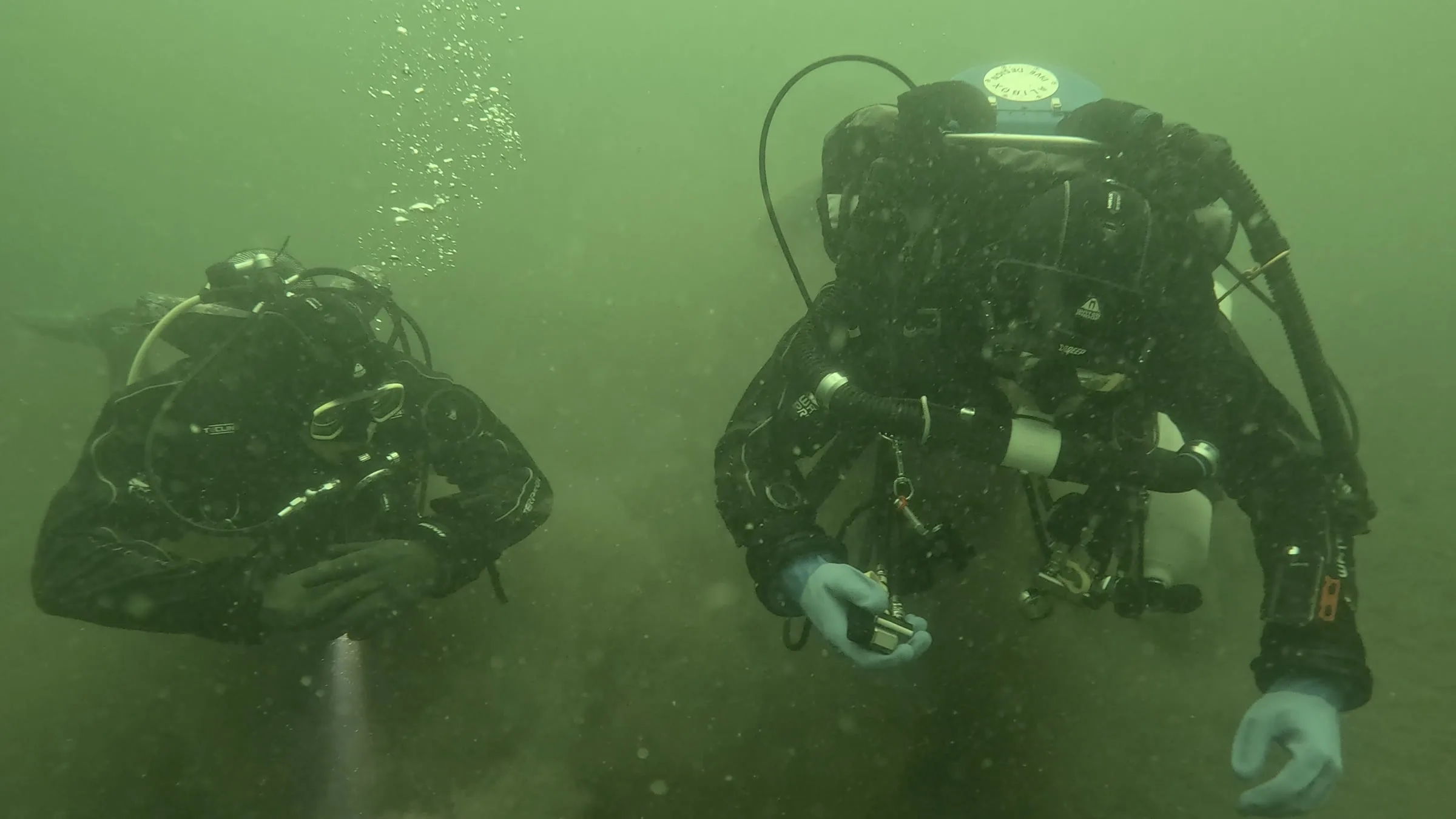
A rebreather on helitrox to 45 m
TDI Helitrox Diluent CCR is a rebreather course for decompression dives to 45 metres with helitrox as the diluent: a mix of air or nitrox with helium. Helium reduces nitrogen narcosis at depth. For diluent and bailout you use mixes with no more than 35 % helium (±5 %) and at least 20 % oxygen, and up to 100 % oxygen for decompression.
TDI calls this the second entry-level rebreather course. You can take it after Air Diluent CCR or after Air Diluent CCR Decompression Procedures, and open-circuit technical divers with TDI Advanced Nitrox and Decompression Procedures or Helitrox certificates can start directly with it. The course is taught on one specific model: you are certified for helitrox decompression diving only on the rebreather you trained on.
What you learn
- Rebreather and decompression: how the system works and is maintained, oxygen sensors and calibration, constant-PO2 theory, CNS and OTU tracking, gradient factors, bailout planning, emergency procedures.
- Helium: helium uptake and elimination, the benefits of helium in bottom gas and of hyperoxic mixes for decompression, hypoxia, high pressure nervous syndrome (HPNS), helium's effects on breathing and thermal protection, helium limits.
- Planning: a recommended maximum equivalent narcotic depth (END) of 30 m, decompression on constant-PO2 tables or planning software, bailout gas planned at 50 l/min for the deep mix and 30 l/min for decompression gas, analysing gas with an oxygen and helium analyser.
How the course runs
The theory takes at least 6 hours, rebreather maintenance 2 hours, and you train for at least an hour in the pool (to 9 m). Over the full course you spend at least 420 minutes in open water, increasing the depth gradually to 45 m. At least four dives use helitrox as the diluent, two of them deeper than 35 m. There are no more than three dives and two decompression dives a day, and no more than 10 minutes of decompression on the rebreather per dive.
In the water you practise rebreather checks, buoyancy control and emergency drills, learn decompression skills with a bailout cylinder and a surface marker buoy, and on one dive bail out to open circuit at depth and complete the decompression that way. The course ends with a written exam (pass mark 80 %).
If you already hold a TDI rebreather certificate, the course is shorter:
- after Air Diluent CCR: 240 minutes of open water, a skills evaluation dive and at least four dives, two of them deeper than 35 m;
- after Air Diluent CCR Decompression Procedures: 120 minutes, at least two helitrox dives, both deeper than 35 m.
What comes next
After the course you can make helitrox decompression dives to 45 m without an instructor's supervision on the rebreather model you trained on, in conditions like those of your training. If you do not dive the rebreather for more than 6 months after the course, TDI requires a refresher. TDI's next courses are Mixed Gas CCR and Advanced Wreck.
Frequently asked questions
What is helitrox?
A mix of air or nitrox with helium. On this course the diluent and bailout may contain no more than 35 % helium (±5 %) and at least 20 % oxygen. Helium reduces nitrogen narcosis at depth.
Do I have to complete Air Diluent CCR Decompression Procedures first?
No. You can start after Air Diluent CCR once you have 30 hours over 30 dives and 6 months of rebreather experience, and open-circuit technical divers can start with this course. After the rebreather decompression course you only need two helitrox dives.
Can I dive deeper than 45 m?
This certificate is for dives to 45 m. TDI teaches rebreather diving to 60 m with a helium diluent on the Mixed Gas CCR course, which requires 50 hours over 50 dives on the rebreather.
Is the certificate valid for another rebreather?
No, only for the model you trained on. Another model needs a crossover course: at least an hour in the pool and four helitrox dives (240 minutes) to 45 m, two of them deeper than 35 m.