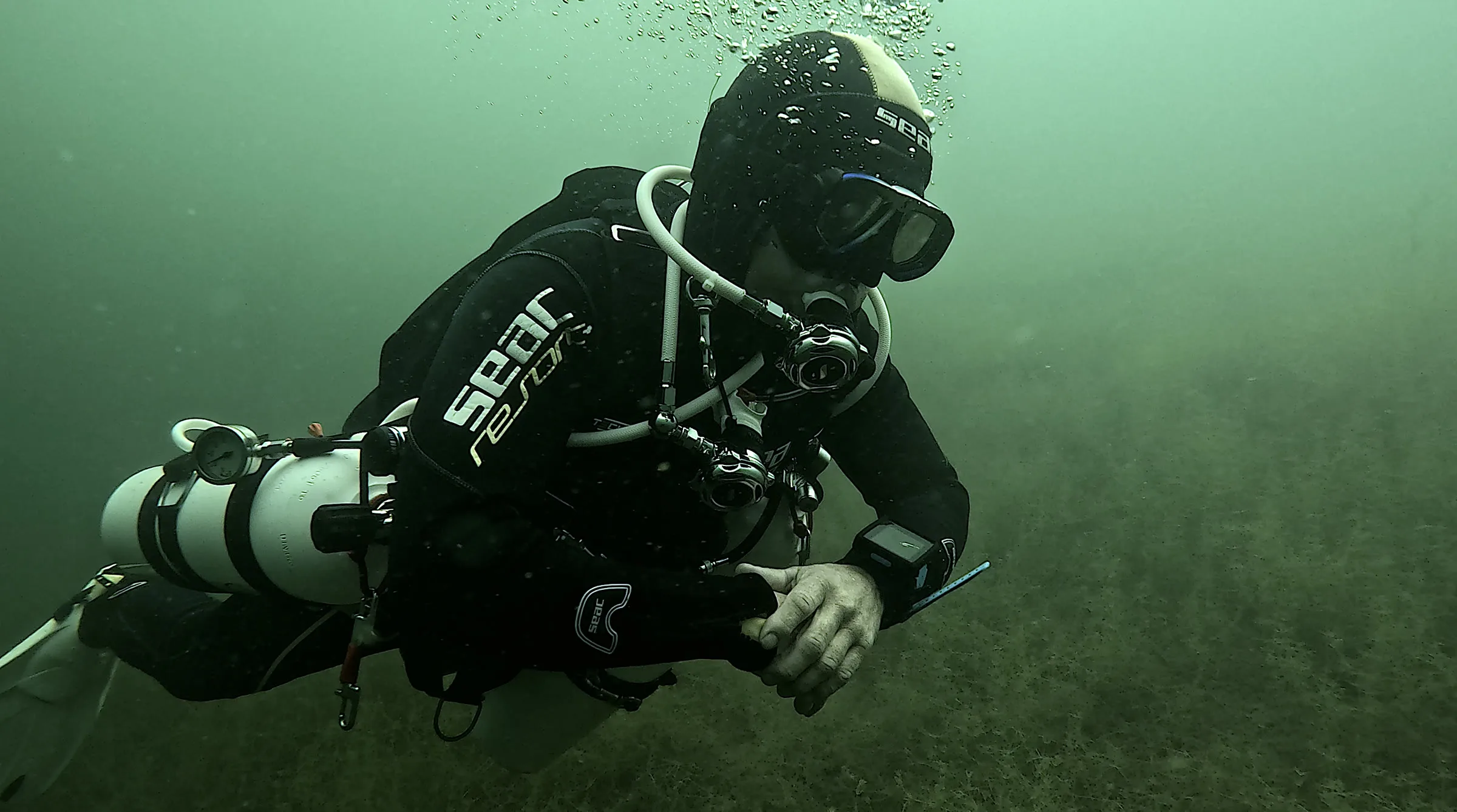
Self-reliant diving, properly prepared
Diving with a buddy is the norm, but an experienced diver may have reasons to dive independently. The PADI Self-Reliant Diver course teaches you how to plan such dives and how to prepare so that no vital piece of equipment is the only one you have.
PADI stresses that self-reliant diving is not for everyone: it takes discipline and the commitment to follow the procedures you learn. These skills also make you a stronger diver when you dive with a buddy or in a team.
What you learn
The course is about handling yourself what a buddy would normally help with:
- planning a dive around your own air consumption;
- using redundant equipment: a redundant air source, a second dive computer and backup signalling devices;
- managing emergencies on your own.
How the course runs
Before the course the instructor assesses your skills. Then you make three training dives, in which you:
- measure your air consumption on a swim to calculate it later;
- switch to your redundant air source in a simulated emergency;
- swim without a mask;
- navigate to various points and to your exit;
- deploy a delayed surface marker buoy (DSMB).
Besides your basic diving equipment you need a DSMB, a redundant gas source, a redundant dive computer and a backup surface signalling device. We agree the equipment and the place of the dives with you before the course.
Frequently asked questions
Why do I need 100 dives?
It is a PADI requirement: only experienced divers with an Advanced Open Water Diver certificate and at least 100 logged dives can start the course. The instructor also assesses your skills before the course.
Is the course useful if I do not plan to dive alone?
Yes. Planning with your air consumption, redundant equipment and handling emergencies are useful with a buddy or in a team too.
What extra equipment will I need?
A delayed surface marker buoy (DSMB), a redundant air source, a second dive computer and a backup surface signalling device. We discuss the exact equipment before the course.
Where do the dives take place?
We agree the place and dates with you individually.