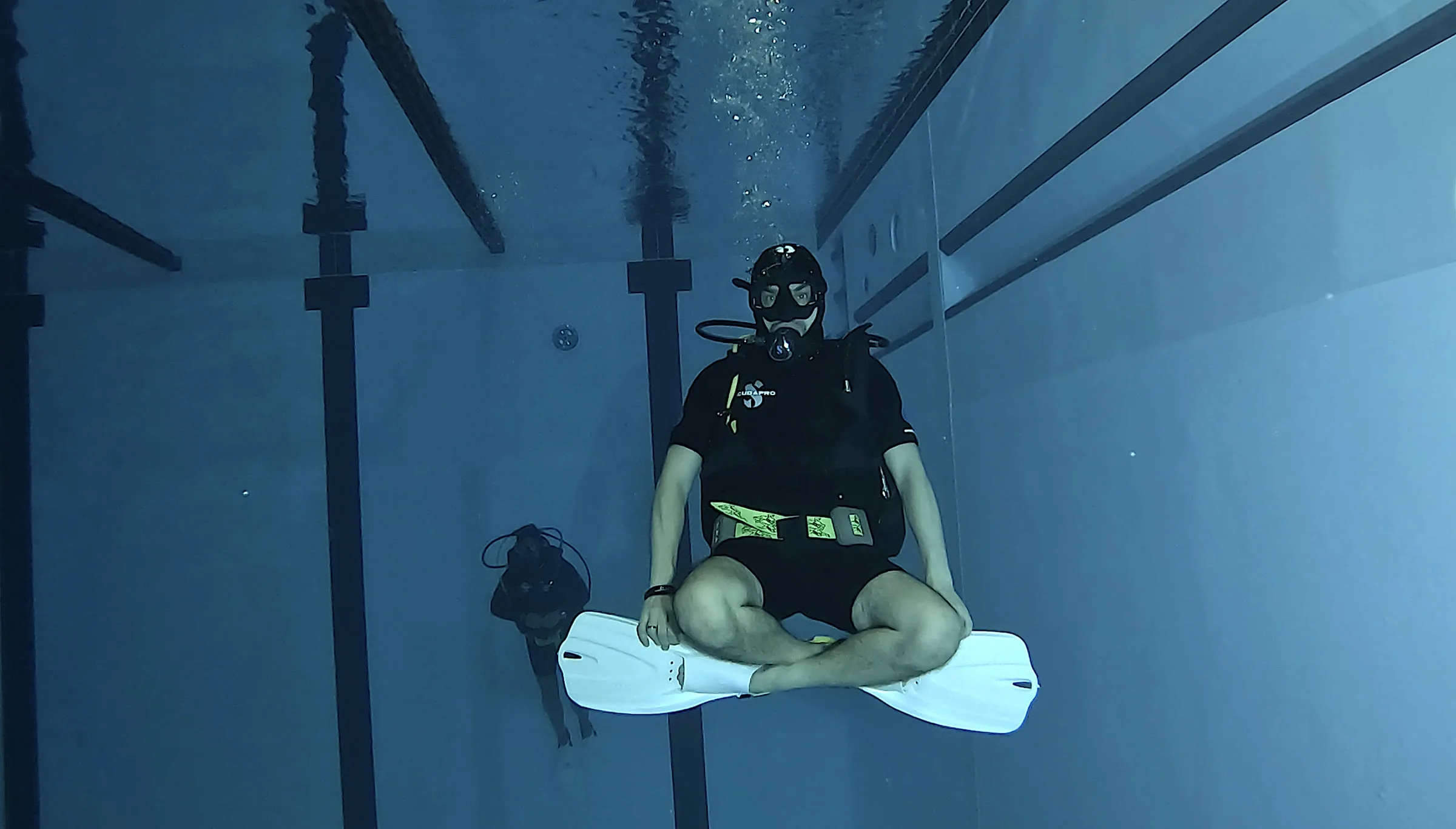
Buoyancy control: the basis of every dive
The buoyancy course is for divers who want to move easily underwater, use less air and ascend, descend or stop in place with almost no effort. Good buoyancy matters on every dive, and especially around wrecks, in poor visibility, when taking photos and when preparing for technical diving. Staying off the bottom also protects underwater life.
The course suits both newly certified and experienced divers.
What you learn
- Working out exactly how much weight you need and placing it so you are balanced in the water
- Holding a stable horizontal position (trim)
- Controlling buoyancy with your breathing
- Hovering horizontally and vertically without using your hands
- Descending, ascending and holding a safety stop smoothly
- Swimming just above the bottom without stirring up sediment
- Using less air
How the course runs
Preparing the equipment
The instructor helps you set up your equipment: you check and distribute your weights, adjust the position of your gear and try your BCD, and if you dive in a dry suit, its valves too. Most buoyancy problems come from equipment that is not set up properly.
Practice in the water
You descend slowly and under control, stop at a chosen depth without touching the bottom, hover in place using only your breathing and change position without moving your hands. You learn to rise and sink by just 10 cm with your breath alone. The instructor sets up an obstacle course: you swim through hoops or between markers, turn on the spot and stop exactly where asked.
Final assessment
On the last dive you show what you have learned: stable buoyancy, body position, manoeuvring and efficient air use. The aim is smoother, quieter and more economical diving.
What comes next
Precise buoyancy is needed for underwater photography, wreck diving and diving with more than one cylinder, so it is worth taking this course before those specialties.
Frequently asked questions
Why take this course if I already have Open Water Diver?
The Open Water Diver course teaches the basics of buoyancy; this course refines them: more precise weighting, holding your position and hovering in place. It helps on every dive.
How many dives are in the course?
Two dives, as the PADI and SDI standards require. Before them the instructor sets up your equipment and weights with you.
Can I dive with my own equipment?
Yes, and it is a good idea: buoyancy is best tuned with the gear you always use. If you do not have your own, we provide it.
Which certificate will I get?
An international PADI Peak Performance Buoyancy or SDI Advanced Buoyancy Control Diver certificate.