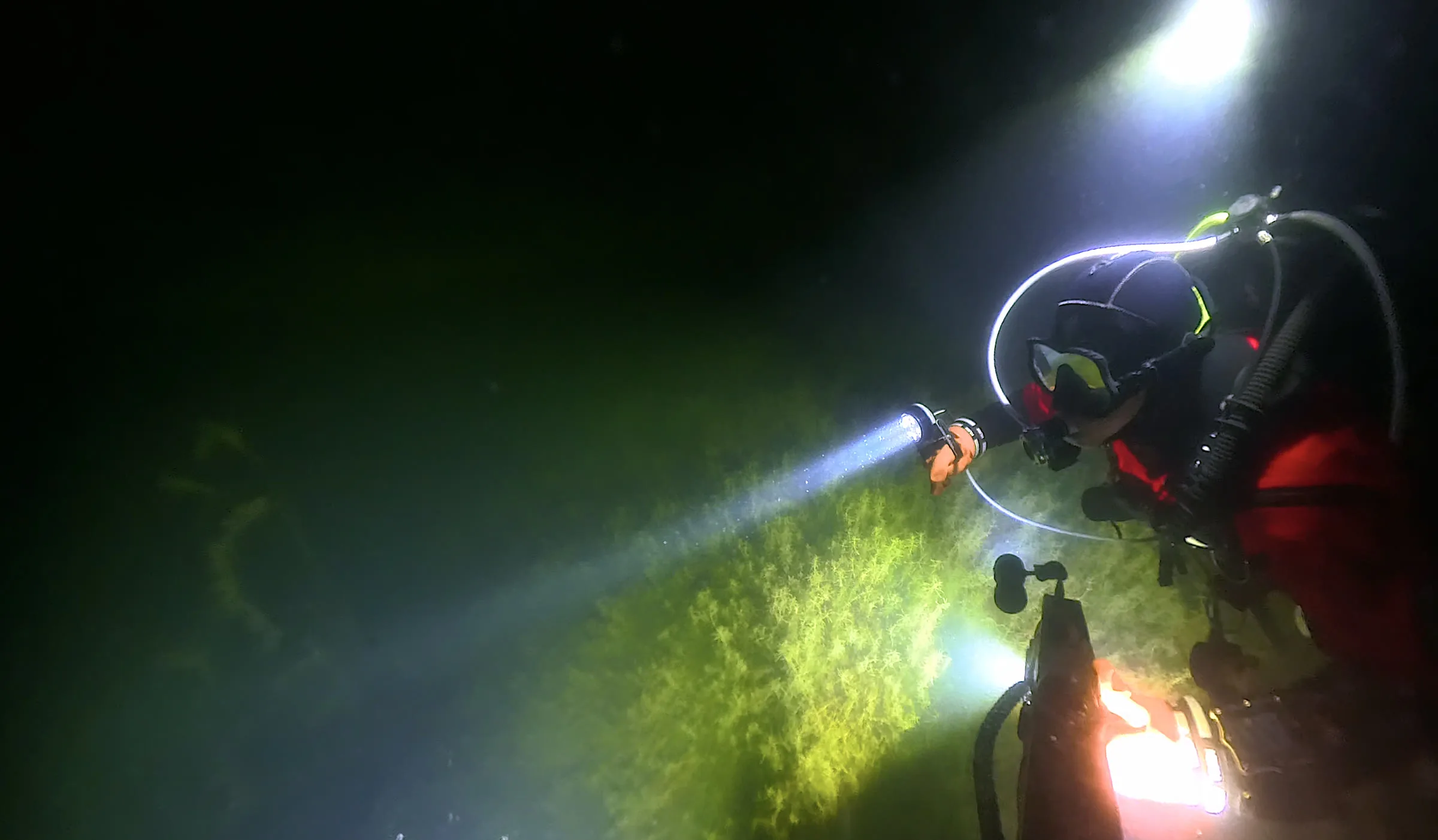
Night diving course: the underwater world after sunset
When the sun goes down, everything changes underwater: daytime animals hide, nocturnal ones come out, and in the beam of your light colours look brighter. Even a dive site you know well becomes new at night. The Night Diver course teaches you to plan and carry out dives safely in the dark and in limited visibility.
SDI calls this course Night – Limited Visibility Diver, because the same skills are needed in daytime when the water is murky.
What you learn
- Planning and organising a night dive and assessing the risks.
- Using a primary and a backup light, and communicating with light and touch signals.
- Staying in contact with your buddy in the dark and knowing what to do if you lose each other.
- Entries, exits and finding your way at night by compass and bottom contours.
- Controlling your buoyancy when there are few reference points.
- Getting to know aquatic life at night.
How the course runs
Theory
Planning a night dive, special equipment, signals, navigation and emergency procedures: light failure, losing your orientation, searching for your buddy.
Night dives
You dive with your instructor after sunset. You practise descending and surfacing in the dark, changing direction without losing your way, following reference points and moving together with your buddy. Every dive is briefed before and debriefed after.
Putting it together
When you finish you receive an international PADI Night Diver or SDI Night – Limited Visibility Diver certificate and are ready to dive at night with a buddy, without an instructor.
What comes next
Good navigation skills help a lot at night, so the Underwater Navigator course is a good next step.
Frequently asked questions
Do I need night diving experience?
No. An Open Water Diver or equivalent certificate is enough. We recommend at least 10 logged dives.
How many dives are in the course?
The SDI course has two night dives, PADI Night Diver has three.
Do I need my own dive light?
No. We provide all the equipment you need for the course.
Is night diving dangerous?
In the dark it is harder to see your buddy and reference points, so night dives are planned more carefully. That is exactly what the course teaches: planning, using light, staying in contact and keeping calm when something unexpected happens.