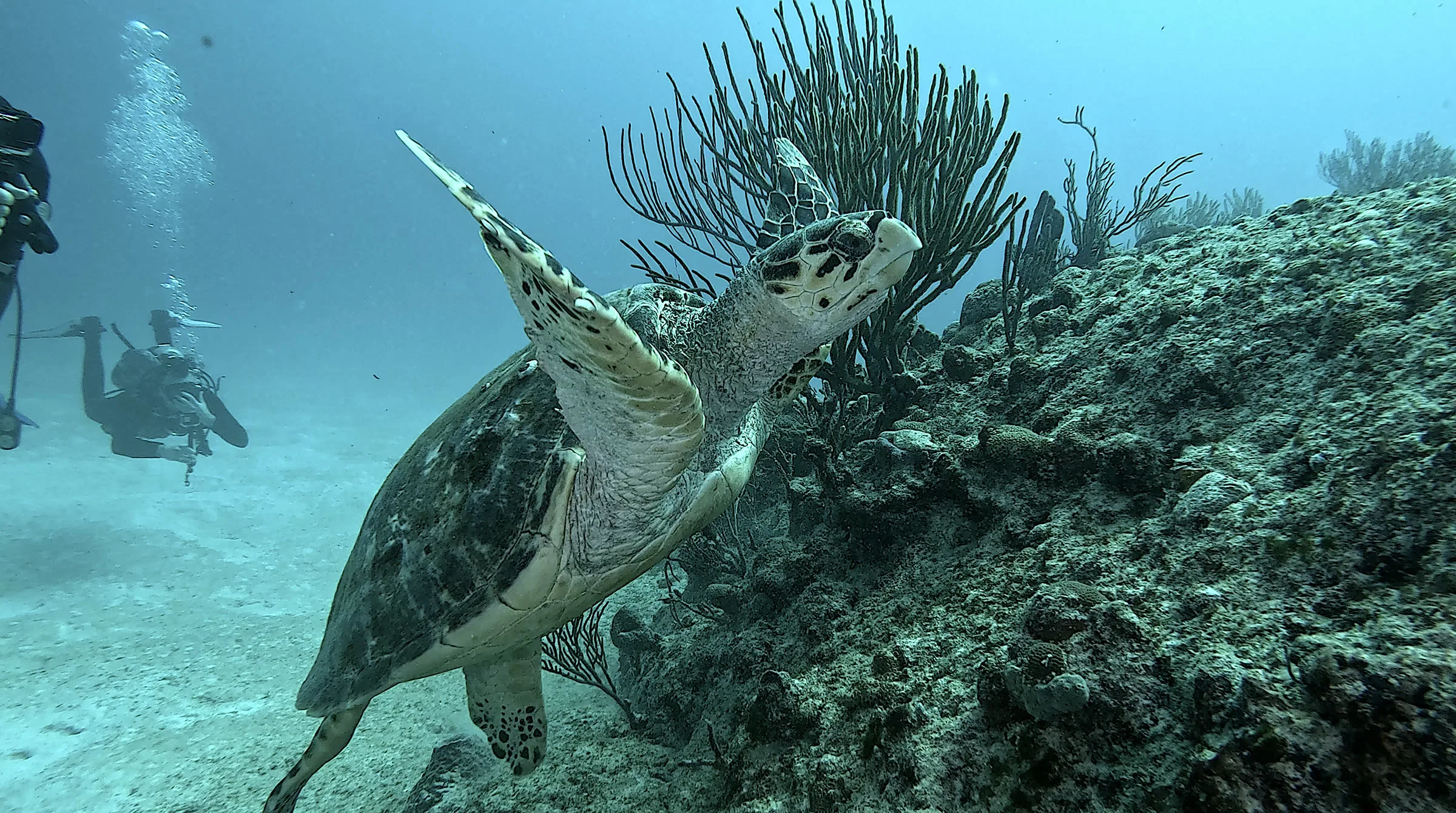
What lives in the water you dive in
The SDI Marine Ecosystems Awareness course is for divers and anyone else who wants to understand what they see underwater. Despite its name, the course is not only about the sea: it covers tropical reefs, temperate waters and freshwater, as well as local plants and animals.
You learn to dive with as little impact on the environment as possible, to recognise dive centres and boat operators that follow best practice, and to understand how observation, surveys and clean-ups help nature.
What you learn
- Physical properties of water: temperature and thermoclines, salinity, light, waves and currents.
- Aquatic life: plankton, plants, animals (sponges, cnidarians, molluscs, arthropods, echinoderms, chordates) and food webs.
- Threats: climate change, coral bleaching, ocean acidification, overfishing and pollution.
- Environmentally friendly diving: buoyancy control and finning technique.
- Observation methods: grid observation and passive observation.
How the course runs
You can complete the course in three ways: with dives, snorkelling, or as a classroom-only course with no previous certificate. The diving and snorkelling versions include two open-water sessions. On the first you observe the site, the bottom, the wildlife and signs of human impact, make two sets of grid observations and note the animals you see so you can identify them later. The second session is at a different site or time of day, so you can compare the two sites and discuss how to reduce human impact.
You need basic diving or snorkelling equipment, a marine life identification guide and a slate. We agree the place and time with you.
Frequently asked questions
Is the course suitable for lake divers?
Yes. It covers freshwater ecosystems and local plants and animals too.
Can I take part without a diving certificate?
Yes. The classroom version needs no certificate, and the snorkelling version needs an SDI Snorkeler or equivalent certificate.
From what age can I take the course?
From 10. Under 18s need parental consent.
How many dives are there?
The diving and snorkelling versions have two open-water sessions. The classroom version has no dives.