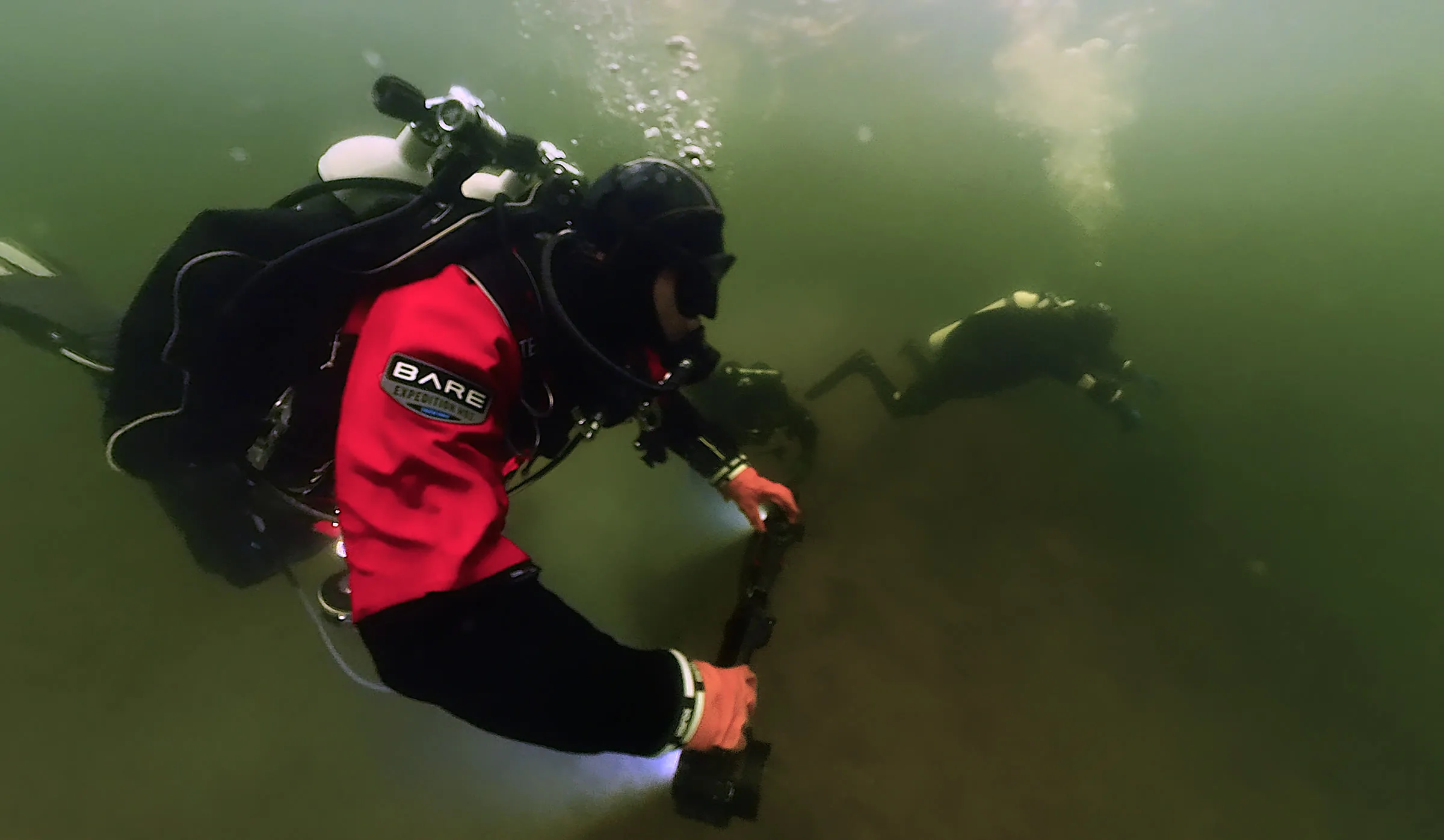
Warm and dry even in 4 °C water
The dry suit course is for divers who want to dive beyond the summer. In Lithuanian lakes, the Baltic Sea and Scandinavia the water is often only 4–10 °C, and a dry suit lets you stay in it longer without getting cold. In autumn and winter the visibility underwater is often better than in summer, so with a dry suit the season does not end.
A dry suit holds air, so you need to know how to control it. In this course you learn to adjust the air in your suit, combine it with your buoyancy compensator and stay calm when something does not go to plan.
What you learn
- Choosing a dry suit type (neoprene, trilaminate, crushed neoprene) and thermal undergarments
- Using the inflator and exhaust valves
- Choosing the right weight for diving in a dry suit
- Combining the suit with your BCD and dealing with excess air in the legs
- Recovering from a feet-up position
- Handling valve problems and water getting into the suit
- Caring for the suit, the zip and the seals
How the course runs
Theory
Types of dry suits, thermal insulation, how the valves work, weighting, the risks of cold water and looking after the suit.
Practice on land and in shallow water
You learn to put the suit on and take it off correctly and try the valves. In shallow water you practise controlling the air in the suit, buoyancy, body position and a safe ascent from 5–6 metres.
Open-water dives
Two dives in Lithuanian lakes: controlled descents and ascents, working the valves at different depths and simulated problems such as a partly flooded suit or a valve failure. At the end the instructor assesses your skills and reviews the theory with you.
What comes next
Ice diving, deep diving and technical diving all call for a dry suit, so this course is often the first step towards them. With the certificate you can rent a dry suit at dive centres anywhere in the world.
Frequently asked questions
Do I need my own dry suit?
Yes, you need your own dry suit for the course. We provide the rest of the diving equipment.
How long does the course take?
Two days: theory, shallow-water practice and two open-water dives.
How is a dry suit different from a wetsuit?
A wetsuit lets in a little water, which your body warms. A dry suit keeps the water out and you wear warm layers underneath, so it is much warmer in cold water. Because the suit holds air, you need to learn to control it, and that is exactly what this course teaches.
Which certificate will I get?
An international PADI or SDI Dry Suit Diver certificate. It shows that you can dive safely in a dry suit and helps when you rent a suit or sign up for ice, deep or technical diving courses.